
Posts in Category: Uncategorized
How Do You Choose Web Hosting for a Photography Business
The process of selecting web hosting in Houston for photographers who want to create online portfolios which showcase their work becomes difficult. Your website functions as your online gallery space which also serves as your studio for creating your first impression. The numerous hosting companies which offer speed and security together with support services create difficulties for users to identify their actual requirements.
Photographers have particular requirements which set them apart from standard business owners. You require a space which enables rapid access to high-resolution images and allows clients to view your galleries while maintaining a professional and trustworthy brand image.
The following steps will guide you in identifying the essential website elements which transform your site into an effective business tool instead of an operational obstacle!
Prioritize Speed and Performance
Your hosting needs to provide rapid page loading because photography websites use many images. Your potential clients will exit your site before viewing your portfolio if your pages load slowly. The best hosting package needs to provide pure solid-state drive (SSD) storage together with server optimization and content delivery network (CDN) integration, which improves website performance. A website that loads faster delivers better user experiences, while it enables your site to achieve higher positions in search results.
Choose Strong Storage and Bandwidth Options
Your large files as a photographer require you to select web hosting in Houston that provide sufficient storage space at no additional cost for your ongoing image uploads. The best way to store high-resolution photographs online requires you to choose between various storage options, which include unlimited storage capacity and storage plans with high limits. Your website needs to maintain its performance level during peak visitor times because multiple users will access your galleries simultaneously.
Look for Reliable Uptime and Security
Your online portfolio must be available 24/7. The provider of the hosting services with a 99.9% uptime guarantee ensures that your website is available 24/7. The need for security matches your work value for security. Your digital portfolio must be secure with features such as SSL certificates, daily backups, malware scanning, and firewalls.
Select a Provider with Easy Website Tools
An easy website creation solution should be selected by you because you lack technical skills. The providers enable users to create websites through drag-and-drop building tools while they provide WordPress enhancements and one-click portfolio theme installation. You want to spend your time taking photos – not dealing with code or troubleshooting technical problems. The requirement for customer support becomes more important because people need assistance during unusual work times, and they need help before important client meetings.
Focus on Scalability as Your Business Grows
Your website requirements will grow as your business reputation increases. Your plans should include video galleries and print e-commerce and booking systems. Choose a web hosting solution that enables you to scale up your resources without the need for service provider changes. Your photography business’s growth needs scalability, which will help your website progress.
The process of choosing a hosting service starts with evaluating the particular needs that are a must for running a photography portfolio, and these particular needs include evaluating the following important aspects: speed, reliability, and security, along with the potential for growth. The process of selecting premium web hosting will help your business thrive on the web with a professional image that matches your potential, and digital marketing companies can often handle it on your behalf!


How Hotel Photography Boosts Social Media Engagement
Engaging visuals are the backbone of online engagement. For hoteliers, the power of good-quality photography cannot be overstated. Great photographs don’t simply show a property; they generate feelings and encourage individuals to learn more. Visual appeal plays an important role in forming potential visitors’ decisions even before coming near your site.
Visual storytelling builds instant attraction
Excellent images share a narrative at once. They transport possible visitors from feed scrolling to daydreaming themselves unwinding in your lobby or taking pleasure from a sunset by the pool. This instant visual appeal grabs attention and encourages customers to stop and engage with your content. Pointing out distinguishing features such as fashionable suites, exquisite cuisine, or breathtaking views helps viewers to almost feel the mood of your hotel.
Authenticity enhances trust and credibility
Authentic images of hotels reflect genuine experience. The viewer is certain of what they see if images really depict the atmosphere and amenities. This building of trust is very vital in the hospitality business, where guest expectations have to be satisfied or surpassed. Disappointment and unfavorable reviews may result from excessive editing or stock photographs that do not capture the actual mood.
Consistency strengthens brand identity
Consistency in photography across social media platforms makes your hotel brand stick. Whether the warm hues for that intimate boutique or slick modern shots for a city high-end stay, consistent imagery has your followers recognizing your posts instantly. This recognition builds engagement and loyalty. Consistent visual themes also assist in messaging, alongside the overall aesthetic appeal of your social media profiles.
Optimized images drive better reach
Employing professionally taken and properly optimized images ensures quick loading and improved rendering on any platform. Social media platforms favor visually appealing content that loads quickly. Therefore, hotels get more visibility and interaction, which is critical for successful campaigns. Using correctly sized and optimized images helps to avoid unpleasant cropping and maintains image quality, therefore giving your hotel a sophisticated and professional aspect.
Strategic use of social media marketing for hotels
Professional hotel photography used as part of social media marketing for hotels increases campaign performance. Pictures accompanied by apt captions and selected hashtags make content shareable. This approach boosts reach, draws fresh followers, and finally results in reservations. Even more authenticity and engagement can be enhanced when photography is combined with user-generated content, including customer pictures.
Engaging content encourages interaction
Photos that inspire comments, shares, or tags build a community around your hotel. Special features or seasonal events, for instance, can spark conversations and engagement. Followers feel more engaged and part of something, and there are increased rates of engagement as a result. Running photo contests or encouraging guests to post their own tales similarly increases engagement and awareness of your brand.
Mobile-friendly visuals cater to modern travelers
Most social media users browse on mobile devices. Hotel photography optimized for mobile viewing improves user experience. Clear, vibrant images on small screens keep potential guests interested and reduce bounce rates. From Facebook postings to Instagram tales, mobile-friendly graphics guarantee your hotel looks great on any device.
Conclusion
In a saturated social media environment, investing in expert hotel photography is absolutely necessary for distinguishing your services. It fosters trust, enhances your brand, and promotes significant contacts. Begin changing your hotel’s online visibility right away by highlighting the visual tale that really enthralls your audience. Your next guest might be just one stunning photo away.
Tips to Boost Your Photography Social Media Presence
Photographers often find it challenging to compete with others and attract more customers. Marketing your photography business on digital platforms is crucial. Freelance photographers also should promote their skills online. Social media platforms allow you to connect with your potential customers and show your photography services. Find some tips on how to develop your social media presence as a photographer.
Pick your niche in the photography world
The easiest way to differentiate yourself from other photography experts is to select a particular niche. For instance, the most common niches are:
- Family photography
- Maternity and newborn photography
- Food photography
- Corporate photography
- Wedding photography
You can choose the photography niche based on your passion. Some want to focus on the best haircuts in Scottsdale while others love sport.
Increase the follower count
Social platforms are best for regular interactions and higher engagement. The main purpose of creating social media profiles is to connect with your target audience. Facebook and Instagram are the best platforms to build your online presence. However, if you do corporate or eCommerce photography, you may create your LinkedIn profile.
Encourage your followers to ask questions and interact with them. Post your stories on Facebook and Instagram. But, it is time-consuming to expand your follower base.
Use hashtags and learn about the hottest topics
Your posts on trending photography-related topics will easily gain attention. Moreover, the use of hashtags for every post is another important step for increasing your reach. You can even make your posts visible to social media users who are not in your follower base. Hashtags are words preceded by the # sign. They allow you to categorize the posts.
Make your photography content adaptable to various platforms
The type of audience in every social platform is quite different. So, you should customize the content accordingly to attract more viewers. For instance, Instagram users like to scroll the pages to see visual content, such as images and videos. On the contrary, text-based posts are preferable to Twitter users. You may research every platform to determine the type of content that performs well.
Post quality photos
Most photographers want to show their portfolios through social platforms. So, if you post clear and quality photos, your potential customers will understand your photography skills. Your photos should show how you have photographed different events and special moments. If there are issues with the original content quality, you can edit the photos with online tools. Even short video content is effective in gathering the attention of viewers.
Invest in paid ads for Facebook PPC campaigns
Although you should try to boost your organic reach, social media PPC is important. As a novice photographer, you can run an awareness campaign. Facebook and other platforms offer various options for paid advertisements. Make sure you have reached the right audience with your photography ads.So, these are tips for boosting your social media presence as a photographer. Your loyal fans can turn into your customers. Promote your photography business on different social platforms and measure the results of your marketing campaigns.
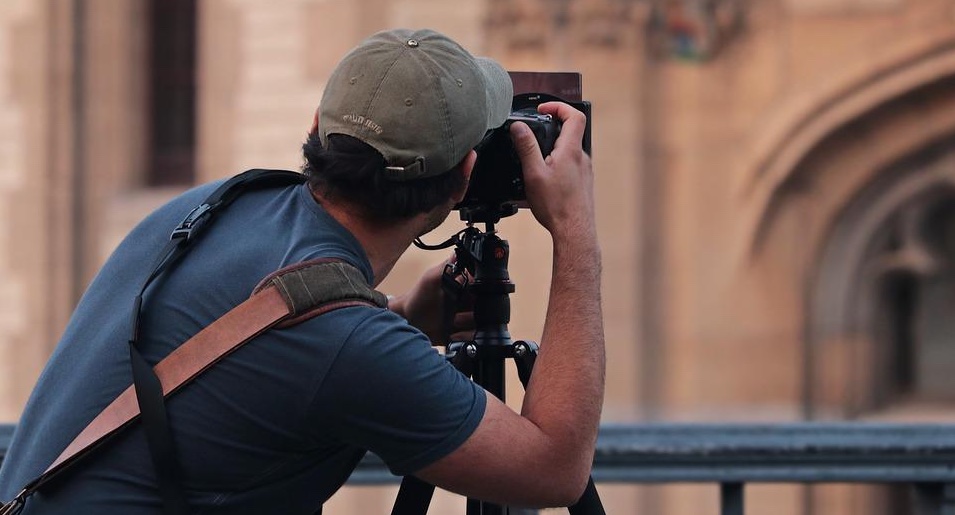
Best Cameras For Beginner Photographers
There are a few things to consider when choosing the best cameras for beginner photographers. The first is the type of camera. There are three main types of cameras: point-and-shoot, bridge, and DSLR. Point-and-shoot cameras are the simplest and most affordable option. They’re great for basic photography, but they don’t offer the same level of control or quality as more expensive cameras. Bridge cameras are a step up from point-and-shoot cameras, offering more features and better image quality. DSLR cameras are the most advanced option, providing the best image quality and the most control over your photography.
The second thing to consider is the price. cameras can range from a few hundred dollars to several thousand dollars. It’s important to find a camera that fits your budget and your needs.
The third thing to consider is the features you need. cameras come with a variety of features, such as high-resolution sensors, autofocus, and built-in flash. Some cameras also offer Wi-Fi and GPS. Choose a camera with the features you need to take the best photos possible.
Finally, consider your level of experience. If you’re a beginner photographer, look for cameras with easy-to-use controls. More experienced photographers may want to choose a camera with more advanced features.
Now that you know what to look for, check out our list of the best cameras for beginner photographers.
Camera Models To Consider
• Cannon EOS Rebel
The Canon EOS Rebel T6i is a great entry-level DSLR camera. It has a 24.2-megapixel CMOS sensor and an ISO range of 100-12,800. The T6i also features built-in Wi-Fi and NFC connectivity, so you can easily share your photos and videos.
• Sony Alpha a6000
If you’re looking for a mirrorless camera, the Sony Alpha a6000 is a great option. It has a 24.3-megapixel APS-C CMOS sensor and an ISO range of 100-25,600. The a6000 also features Wi-Fi and NFC connectivity, as well as a fast 11 fps shooting speed.
• Nikon D3400
The Nikon D3400 is another great entry-level DSLR camera. It has a 24.2-megapixel CMOS sensor and an ISO range of 100-12,800. The D3400 also features SnapBridge, which lets you easily transfer your photos and videos to your smartphone or tablet.
• Cannon PowerShot G9
If you’re looking for a compact camera, the Canon PowerShot G9 X Mark II is a great option. It has a 20.1-megapixel 1-inch CMOS sensor and an ISO range of 100-12,800. The G9 X Mark II also features built-in Wi-Fi and NFC connectivity, as well as a fast 8.2 fps shooting speed.
So, there you have it – three great cameras for beginner photographers. With any of these cameras, you’ll be able to take beautiful photos and videos that you’ll be proud to share with your friends and family.
Cameras are a vital tool for many photographers, and choosing the best camera brand can be a tough decision. There are many different cameras on the market, and each has its own strengths and weaknesses. Doing your research before purchasing a camera is essential to ensure that you’re getting the best possible quality for your money.
Some of the most popular camera brands include Canon, Nikon, Sony, and Pentax. These companies have been in the business for many years, and their products are well-respected by professionals and amateurs alike. Each company offers a wide range of cameras, from entry-level models to high-end professional cameras.